








Communication Delays
Delayed speech, limited verbal language, difficulty sustaining conversations, or repeating words and phrases (echolalia).
Gold-standard Autism Spectrum Disorder (ASD) assessments designed to unlock your child’s potential and secure the support they need.
Every child develops at their own pace — but as a parent, you know when something feels different. If you’ve noticed challenges in how your child communicates, interacts, or responds to the world around them, an autism assessment can provide clarity and reassurance. Common indicators parents notice include:
Delayed speech, limited verbal language, difficulty sustaining conversations, or repeating words and phrases (echolalia).
Reduced eye contact, limited interest in playing with peers, difficulty understanding social cues, or preferring to play alone.
Hand-flapping, rocking, lining up toys, repetitive movements, or distress with changes in routine.
Over- or under-reaction to sounds, lights, textures, clothing, food, or physical touch.
A diagnosis is not a label that limits your child. It is the gateway to early intervention, school accommodations, and a therapy plan that supports your child’s development and independence.
Delayed speech, limited verbal language, difficulty sustaining conversations, or repeating words and phrases (echolalia).
Reduced eye contact, limited interest in playing with peers, difficulty understanding social cues, or preferring to play alone.
Hand-flapping, rocking, lining up toys, repetitive movements, or distress with changes in routine.
Over- or under-reaction to sounds, lights, textures, clothing, food, or physical touch.
A diagnosis is not a label that limits your child. It is the gateway to early intervention, school accommodations, and a therapy plan that supports your child’s development and independence.
Delayed speech, limited verbal language, difficulty sustaining conversations, or repeating words and phrases (echolalia).
Reduced eye contact, limited interest in playing with peers, difficulty understanding social cues, or preferring to play alone.
Hand-flapping, rocking, lining up toys, repetitive movements, or distress with changes in routine.
Over- or under-reaction to sounds, lights, textures, clothing, food, or physical touch.
A diagnosis is not a label that limits your child. It is the gateway to early intervention, school accommodations, and a therapy plan that supports your child’s development and independence.
We understand that assessments can feel overwhelming. Our process is designed to be child-friendly, respectful, and transparent at every step.
We begin with a detailed discussion covering your child’s milestones, medical history, daily functioning, and your main concerns.
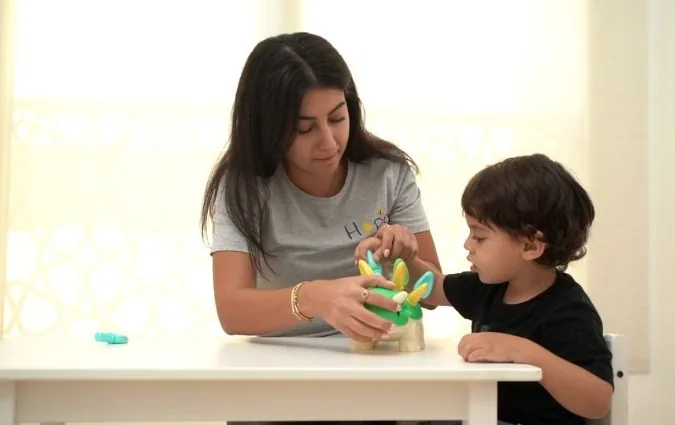
Your child engages in play-based and structured activities with our Clinical Psychologists in a calm, supportive environment.
With your consent, we collect information from teachers to understand how your child functions in a learning setting.
All findings are analyzed and shared with you in a detailed, easy-to-understand report.
We don’t stop at diagnosis. You receive a clear roadmap, including therapy recommendations (such as speech therapy, occupational therapy, or ABA), school support letters, and guidance on what to do next.
We do not rely on observation alone or assumptions. Our assessments are conducted using internationally recognized, evidence-based tools to ensure diagnostic accuracy and clarity. Each assessment is selected based on your child’s age, needs, and presenting concerns. Our methodology may include:
The global gold standard for observing social communication, play, and behavior related to autism.
A comprehensive, structured caregiver interview that explores developmental history and early signs.
To understand learning abilities, problem-solving skills, and everyday functional independence.
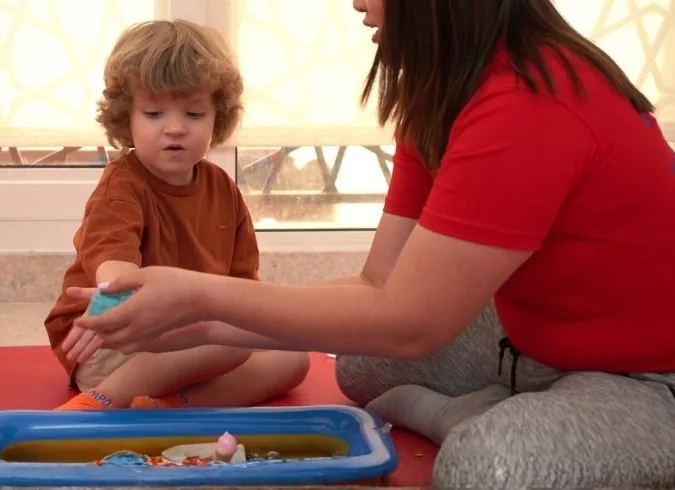
Assessments are conducted by DHA-licensed Clinical Psychologists specializing in neurodevelopmental conditions.
We assess the whole child — communication, sensory processing, behavior, learning, and emotional needs.
Our diagnostic reports are recognized by schools, insurance providers, and government entities for support services.
We prioritize assessment bookings so families can access support without unnecessary delays.
A formal diagnosis often protects your child’s rights. It helps schools provide support such as learning accommodations, shadow teachers, or an Individualized Education Plan (IEP).
From intake to final report, timing varies by assessment components and family availability.
No referral is required. Parents can book an assessment directly.
Early understanding leads to meaningful progress. Let us help you understand your child’s unique strengths and support their development with confidence.
Hope Abilitation Medical Center
Dubai, UAEOnline Booking
Available Nowinfo@hope-amc.com
Quick Response