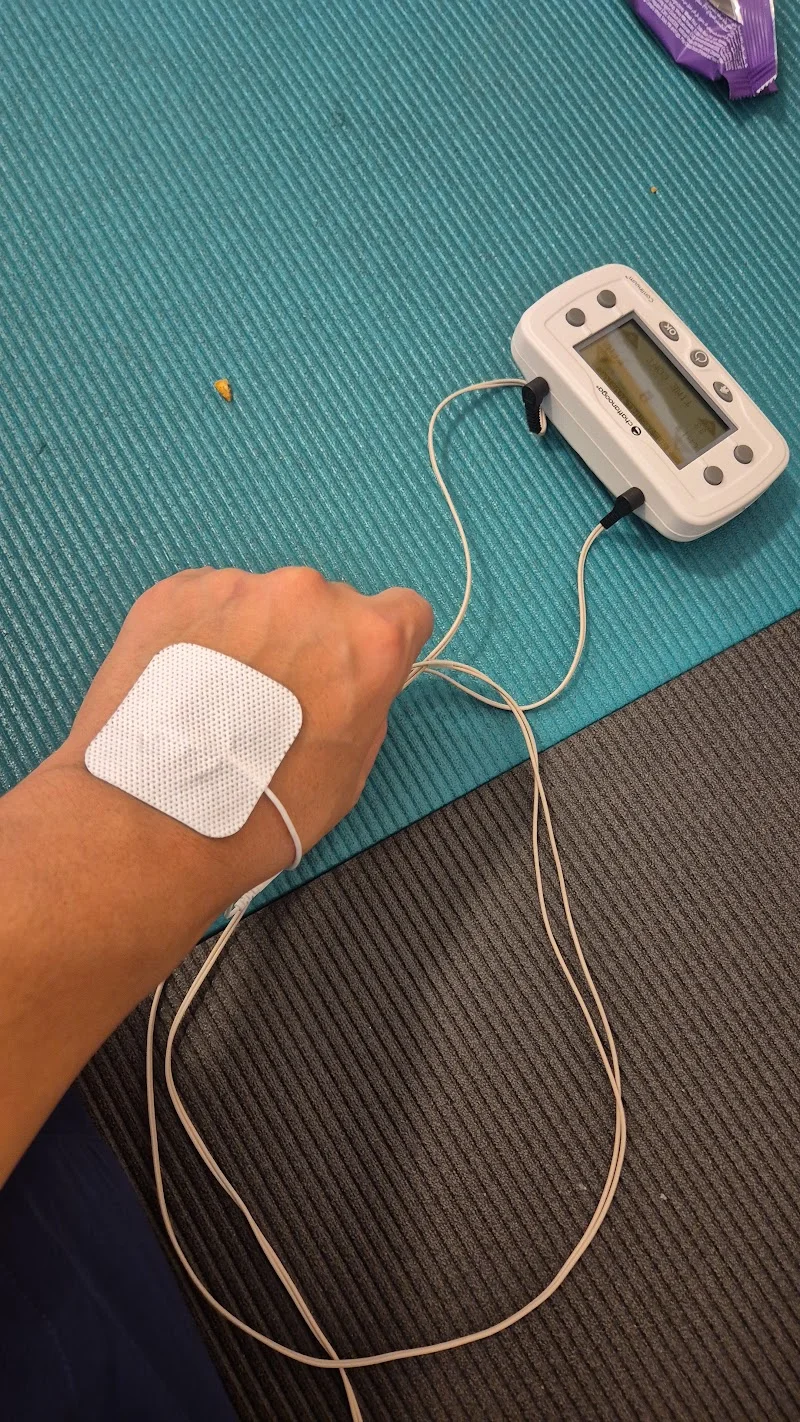
Task Specific Electrical Stimulation (TASES)
TASES uses electrical impulses to activate selected muscles during purposeful movement. It can form part of a physiotherapy plan to support muscle control, coordination and functional abilities.
How does TASES work?
A trained therapist places surface electrodes over selected muscles and adjusts the stimulation while the patient practices active tasks, such as reaching, standing or stepping. The aim is to support muscle activation at the time it is needed for the movement.
Goals of treatment
Depending on the assessment, goals may include:
- Improving muscle strength and control.
- Developing motor skills and coordination.
- Working on joint movement and muscle stiffness.
- Supporting functional mobility and everyday activities.
Who may benefit?
TASES can benefit people with mobility impairments caused by conditions such as stroke, spinal cord injury, multiple sclerosis or cerebral palsy, supporting functional movement and mobility.
Assessment and supervision
The therapist reviews the person’s medical history, selects the muscles and activities, and monitors comfort and response. Electrical stimulation is not suitable for everyone. Discuss any medical conditions, implanted devices or concerns with the treating clinician before starting.
Getting started
Contact Hope AMC to discuss an assessment and how TASES might fit within an individual physiotherapy plan. The treatment goals and schedule are agreed following assessment, and progress varies between individuals.

Rehabilitation
- Pop-Up Intensive Therapy Programs
- Prevocational Program
- School Readiness Program
- Intensive Therapy International
- DMI Therapy
- TASES
- ABA Therapy
- Scoliosis Therapy
- Prechtl General Movements Assessment
- Vitalstim Therapy
- Early Intervention
- Telehealth
- Intensive Therapy
- Physiotherapy
- Spider Cage
- Dunag-02 Suit
- Cuevas Medek Exercises (CME)®
- Speech Therapy
- Social Skills Group
- Feeding Therapy
- Tube Weaning
- Picky Eaters
- Occupational Therapy
Opening Hours
- Monday – Sunday
- 08:00 – 19:00
Frequently Asked Questions
What is TASES?
TASES uses electrical impulses to activate selected muscles during purposeful movement. It can form part of a physiotherapy plan to support muscle control, coordination and functional abilities.
How is suitability assessed?
The therapist reviews the person’s medical history, selects the muscles and activities, and monitors comfort and response. Electrical stimulation is not suitable for everyone. Discuss any medical conditions, implanted devices or concerns with the treating clinician before starting.
Can TASES be combined with physiotherapy?
Contact Hope AMC to discuss an assessment and how TASES might fit within an individual physiotherapy plan. The treatment goals and schedule are agreed following assessment, and progress varies between individuals.